
Baked Honey Mustard Salmon (15-Minute Dinner)
The post may contain affiliate links.

This Baked Honey Mustard Salmon coats tender, flaky salmon in a glossy glaze of honey, Dijon, and old-style mustard, then bakes it until tender. It’s sweet, tangy, and savory all at once, and it goes from fridge to table in about 15 minutes.
Looking for a few more fish recipes? Check out my Foil Baked Chilean Sea Bass with Lemon Parmesan Cream Sauce, Creamy Tuscan Steelhead Trout, Honey Balsamic Steelhead Trout, and Baked Flounder with Tomatoes and Basil.

It’s no secret I am all about flavor, and finding easy ways to kick my flavors up a notch is always my agenda. It’s amazing what a spoonful of mustard can do! Combined with a few simple ingredients, you can take your salmon recipes from average to excellent.
This is the recipe I reach for on nights when I’ve got nothing left in the tank but still want something great. While the recipe is simple, the trick is balance (and choosing the right mustard; see my recommendation below). Honey brings rich sweetness, smooth Dijon adds a tangy bite, and old-style mustard seeds pop with savory heat. Minced garlic adds savory depth, and a small amount of turmeric adds a slightly bitter note that keeps the sweetness in check.
Cutting the fillet into 2-inch pieces means more glaze on every bite and a faster, more even bake. As the salmon cooks, the glaze thickens and turns sticky. One baking dish, one small bowl, one whisk, and dinner is done.
What you’ll love about this recipe:
Ingredients you’ll need to make Baked Honey Mustard Salmon:
- Salmon fillet: Rich and buttery with large, tender flakes. Its natural fat keeps it moist in the oven, and its bold flavor stands up to a strong glaze. Skin-on or skinless both work.
- Dijon mustard: The tangy, sharp base of the glaze. Its smooth texture helps the honey and spices blend into a thick sauce that clings to the fish.
- Old-style mustard: Also called whole-grain mustard. The whole seeds add texture, a little pop in every bite, and a milder, more rounded mustard flavor than Dijon. Together, these mustards are the perfect combination of taste and texture.
- Raw unfiltered honey: Brings rich sweetness to balance the sharp mustard and turns sticky and glossy in the oven. Raw honey has a fuller, more complex flavor than the clear squeeze-bottle kind.
- Minced garlic: Adds a savory, aromatic layer that keeps the glaze from tasting like dessert.
- Sea salt and black pepper: Season the fish directly so the meat under the glaze is flavorful all the way through. Black pepper adds a little kick.
- Ground turmeric: Adds an earthy, slightly bitter note that tames the honey’s sweetness, plus a bright golden color that makes the glaze look as good as it tastes.
How to make Baked Honey Mustard Salmon:
Heat the oven and prep the salmon (about 2 minutes). Preheat the oven to 375°F. Cut the salmon fillet into 2-inch-wide pieces, season them with sea salt and black pepper, and arrange them in a baking dish.

Whisk the glaze (about 2 minutes). In a small bowl, whisk the Dijon mustard, old-style mustard, raw honey, minced garlic, and turmeric until smooth.

Glaze and bake (about 11 minutes). Spoon the glaze evenly over each piece of salmon and bake until the fish flakes easily and the glaze is glossy and bubbling.

Serve. Spoon the sticky pan juices over the salmon and serve right away.


Recipe Tips & Tricks
- A quick press with paper towels removes surface moisture, so the salt sticks and the glaze clings to the fish instead of sliding off into the dish.
- Honey caramelizes and sticks to the pan as it bakes. A sheet of parchment paper or foil in the baking dish means you can toss the mess and skip the scrubbing.
- For deeper color and more caramelized flavor, switch the oven to broil for the last 1-2 minutes. Watch closely, since honey goes from golden to burnt quickly.
- Pure maple syrup works in place of honey for a rounder, caramel-like sweetness. If you don’t have old-style mustard, use 3 tablespoons of Dijon total; you’ll lose the seed texture but keep the flavor.
- Whisk a little crushed red pepper or cayenne into the glaze for a spicy kick, or squeeze fresh lemon juice over the salmon just before serving to add a sour edge that sharpens the sweetness.
Make-Ahead, Storage, and Reheating Tips
- Make ahead: Whisk the glaze up to 3 days ahead and refrigerate it in an airtight container. Stir it well before using, since the honey may settle. You can also cut and season the salmon up to 4 hours ahead and keep it covered in the refrigerator.
- Storage: Store leftover salmon in an airtight container in the refrigerator for up to 3 days. Leftovers are great served over a salad or rice bowl. Freezing cooked salmon isn’t recommended, since it turns dry and crumbly when thawed.
- Reheating: Reheat the salmon in a covered baking dish in a 275°F oven for 10-15 minutes, just until heated through, to keep it moist. If you use the microwave, reheat at 50% power in 30-second bursts.
Frequently Asked Questions
How do I know when baked salmon is done? The salmon is done when it turns from translucent to opaque, flakes easily with a fork, and reads 145°F in the thickest part on an instant-read thermometer. If you like your salmon a little more tender and moist in the center, many cooks pull it at 130-135°F and let it rest for 2-3 minutes.
Does the type of mustard I use matter? Yes. The glaze is only five ingredients, and mustard makes up almost half of it. So whatever your mustard tastes like, the glaze will taste like it. Cheaper “Dijon-style” mustards tend to taste mostly like vinegar and salt. With the honey, that can make the glaze taste flat and too sweet instead of balanced. I recommend Maille or Edmond Fallot. And don’t use yellow mustard. It’s mild and vinegary, and it won’t stand up to the honey.
Can I use frozen salmon? Yes. Thaw it overnight in the refrigerator, or seal it in a zip-top bag and submerge it in cold water for about 30-45 minutes. Pat it very dry before seasoning, since thawed fish releases extra water that can thin the glaze.
Should I leave the skin on? It’s up to you. Skin-on salmon holds together a little better and is easy to separate after baking, since the meat lifts right off the skin. Place skin-on pieces skin side down in the dish so the glaze stays on top.
What can I serve with salmon? Roasted Sweet Potatoes & Brussels Sprouts, Quick & Easy Creamed Spinach, Herb Roasted Potatoes with Mustard Vinaigrette, Healthier Red Potatoes Au Gratin, or Cheesy Bourbon Potatoes Au Gratin
When you want a tasty salmon recipe, this Honey Mustard Glazed Salmon is spot on. This easy Honey Mustard Salmon takes about five minutes to prep and around 10 minutes to cook. Using simple pantry ingredients, it is one of the easiest weeknight dinners you’ll make.
Print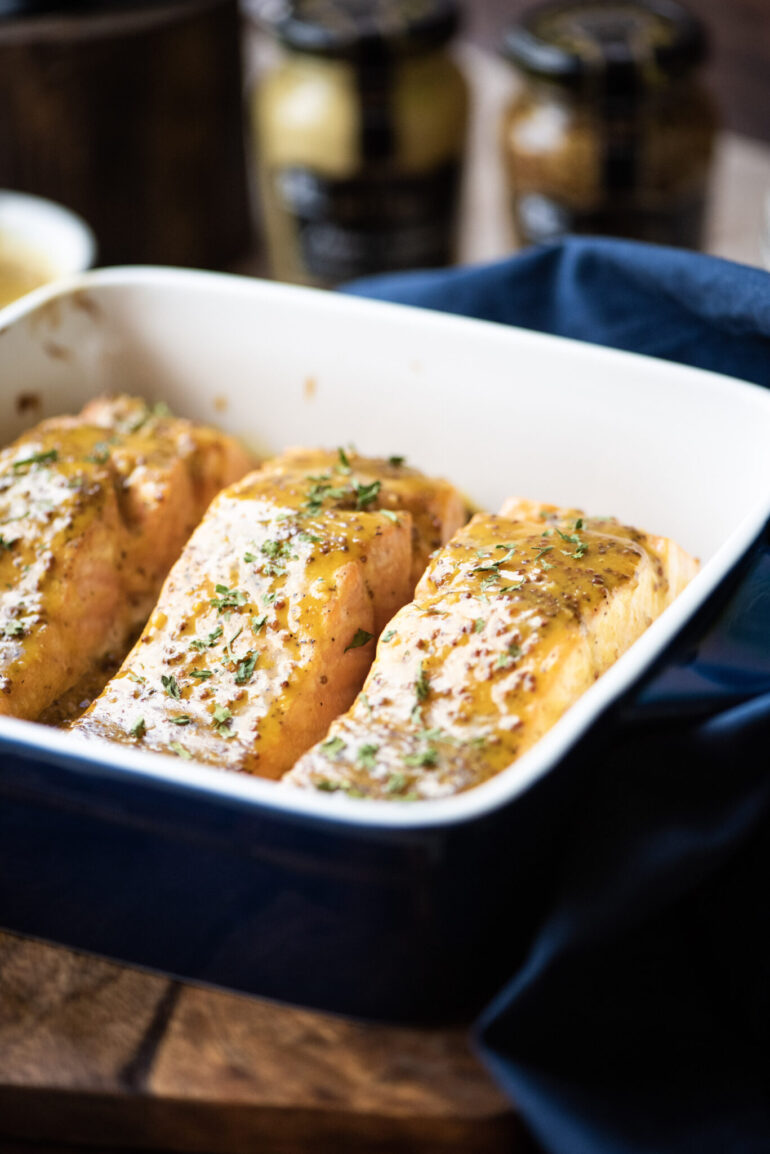
Baked Honey Mustard Salmon
Baked Honey Mustard Salmon with a sweet, tangy Dijon and whole-grain mustard glaze. A delicious weeknight dinner ready in just 15 minutes!
- Total Time: 15 minutes
- Yield: 2 1x
Ingredients
- 1 lb salmon fillet
- 1/4 tsp sea salt
- 1/2 tsp black pepper
- 2 tbsp Dijon mustard
- 1 tbsp old-style (whole-grain) mustard
- 1/4 cup raw unfiltered honey
- 1 tsp minced garlic
- 1/4 tsp ground turmeric
 Get Recipe Ingredients
Instructions
- Preheat the oven. Heat the oven to 375°F. Line a baking dish with parchment paper or foil for easier cleanup, if you like.
- Prep the salmon. Pat the salmon dry with paper towels. Cut the fillet crosswise into 2-inch-wide pieces. Season all sides with sea salt and black pepper, then arrange the pieces in the baking dish, skin-side down if skin-on, leaving a little space between each one.
- Make the glaze. Add the Dijon mustard, old-style mustard, honey, minced garlic, and turmeric to a small bowl and whisk until smooth.
- Glaze the salmon. Spoon the glaze evenly over each salmon piece, using the back of the spoon to spread it to the edges.
- Bake. Bake for 11 minutes, until the salmon is opaque, flakes easily with a fork, and reads 145°F in the thickest part. Thicker pieces may need 1-2 more minutes.
- Serve. Spoon the sticky glaze and juices from the bottom of the dish over the salmon and serve.
Notes
A quick press with paper towels removes surface moisture, so the salt sticks and the glaze clings to the fish instead of sliding off into the dish.
Honey caramelizes and sticks to the pan as it bakes. A sheet of parchment paper or foil in the baking dish means you can toss the mess and skip the scrubbing.
For deeper color and more caramelized flavor, switch the oven to broil for the last 1-2 minutes. Watch closely, since honey goes from golden to burnt quickly.
Pure maple syrup works in place of honey for a rounder, caramel-like sweetness. If you don’t have old-style mustard, use 3 tablespoons of Dijon total; you’ll lose the seed texture but keep the flavor.
Whisk in a little crushed red pepper or cayenne for a spicy kick, or squeeze fresh lemon juice over the salmon just before serving for a sour edge that sharpens the sweetness.
Store leftover salmon in an airtight container in the refrigerator for up to 3 days. Leftovers are great flaked over a salad or rice bowl. Freezing cooked salmon isn’t recommended, since it turns dry and crumbly when thawed.
- Prep Time: 4 minutes
- Cook Time: 11 minutes
- Category: Fish, Seafood
- Method: Baking, Oven Baked
- Cuisine: American
Nutrition
- Serving Size: half the recipe, based on 2 servings
- Calories: 630
- Sugar: 35 g
- Sodium: 879 mg
- Fat: 32 g
- Saturated Fat: 7 g
- Carbohydrates: 38 g
- Fiber: 1 g
- Protein: 47 g
- Cholesterol: 125 mg
This is a great way to prepare salmon.
I personally do not like the skin and my husband does – so I crisp the skin in a non-stick frypan before putting it into the oven. Then I finish by baking as your recipe indicates. When I serve it, I include the skin from my piece of salmon with his portaion – and we are both very happy!
I recently had the opportunity to go to Paris and pick up one of the special Maille mustards they have on draught. I made salmon using the limited edition that included rosemary and honey – which was simply divine.
I appreciate your sharing the importance of the mustard you pick – it makes all the difference!
Thanks so much Joanne for sharing! That crispy skin process you have in place sounds awesome! Yes it definitely makes a difference thanks for sharing your thoughts!