
Old-Fashioned Southern Sweet Potato Pie

This Old-Fashioned Southern Sweet Potato Pie silences the room after the first forkful: a creamy, custard-smooth filling with deep caramel notes from brown sugar and pure cane syrup, spiced with cinnamon and nutmeg. It tastes like a Sunday dinner at your grandmother’s house, but it comes together with nothing more than a baking sheet (paid link), a bowl, and a hand mixer (paid link).
If you love sweet potatoes, you should check out a few more of my recipes: Mini Sweet Potato Pies, Roasted Sweet Potatoes & Brussels Sprouts, Sweet Potato Hand Pies, Moist Sweet Potato Muffins, and Sweet Potato Cheesecake.
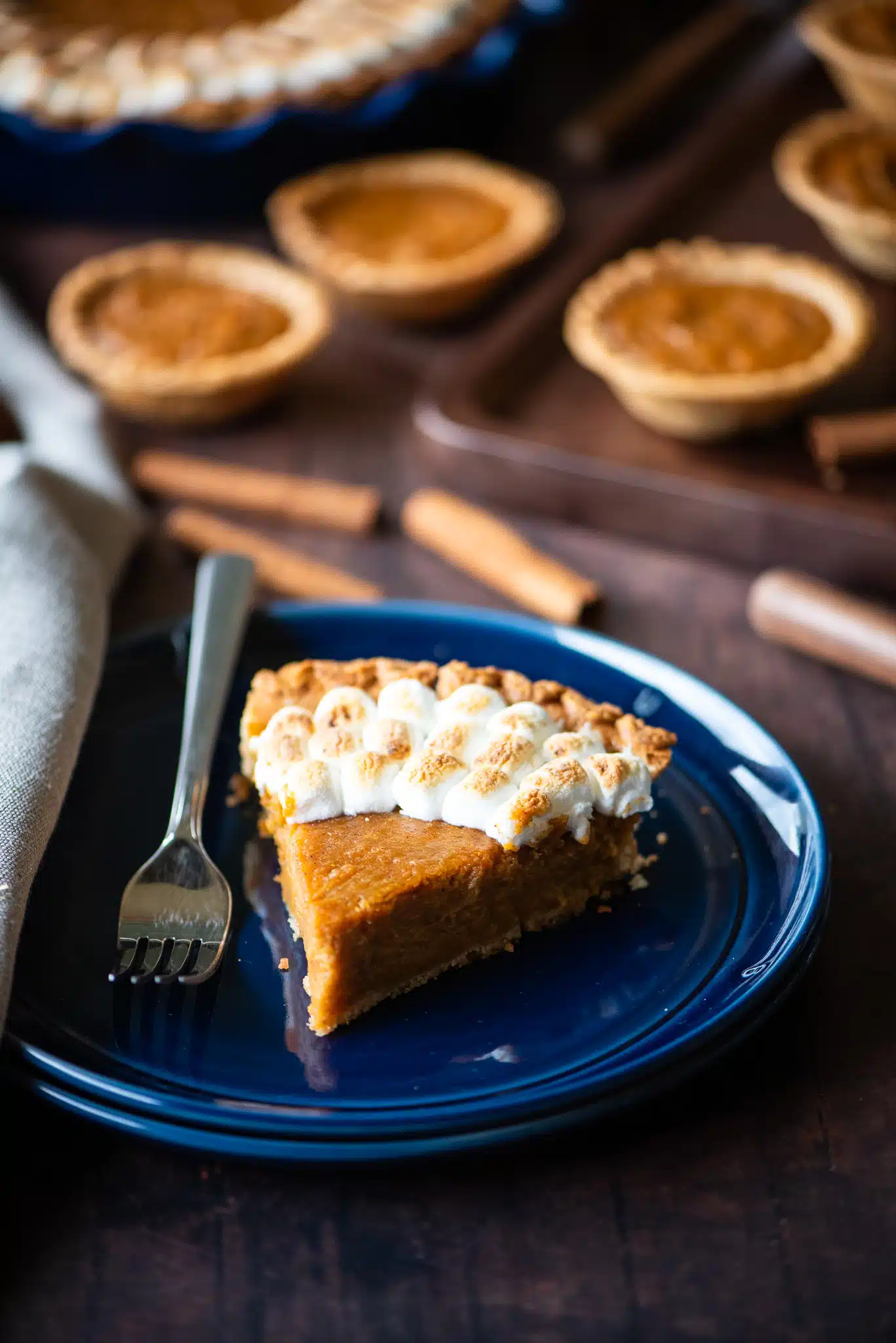
My family has handed down this classic recipe for many years. I’ve followed my grandmother’s version for years and haven’t changed anything. It’s true to how I enjoyed it growing up.
Why do I stand behind this old-school, classic version? Because of my very special ingredient—pure cane syrup. Cane syrup adds a slightly bitter, molasses-like flavor that keeps the sugar from tasting flat. Along with the syrup, evaporated milk gives the perfect texture without watering things down, and a pinch of salt makes every other flavor snap into focus. I’ll walk you through why behind every step, including the two mistakes that make most homemade pies crack, so yours comes out glossy, set, and slice-perfect every time.
What you’ll love about this recipe:
Ingredients you’ll need to make Old-Fashioned Southern Sweet Potato Pie:
Be sure to check out the full recipe and ingredient list below
- Sweet potatoes: The foundation. Their natural starches and sugars form the filling, along with sweetness and that signature burnt-orange color. Look for firm, deep-orange-fleshed varieties like Garnet or Jewel. Three medium-sized sweet potatoes (8-12 oz. each) will make two whole 8- or 9-inch pies. Use any leftovers in my Sweet Potato Pancakes.
- Butter: Adds richness and a rounded, nutty flavor. Melted butter blends seamlessly into the warm potatoes and gives the pie its creamy texture. Use unsalted so you control the salt.
- Granulated sugar: Provides sweetness and helps the custard set into tender, sliceable slices.
- Brown sugar: The molasses in brown sugar adds caramel flavor and a hint of acidity that balances the potatoes. It also keeps the filling moist.
- Pure cane syrup: The Southern secret. Cane syrup (such as Steen’s) has a dark, caramel, molasses flavor that keeps the pie from tasting one-note sweet. It also gives the top a beautiful glossy finish.
- Seasonings and flavorings (vanilla extract, cinnamon, nutmeg, and salt): Vanilla adds sweetness and rounds out the spices. Cinnamon and nutmeg give that classic, holiday aroma. A small pinch of salt is the quiet hero: it tames bitterness, sharpens sweetness, and lets the sweet potato taste like itself.
- Evaporated milk: Concentrated milk with about 60% of its water removed. It adds creamy consistency and subtle sweetness without thinning the filling the way regular milk would. It works at high temperatures without curdling. I use PET.
- Eggs: The structural ingredient. Eggs turn a loose purée into a set, sliceable pie. Add them last so they aren’t overbeaten.
- Frozen pie shells: A smart shortcut. A frozen shell holds its shape and stays crisp, and baking straight from the freezer helps prevent a soggy bottom. I share a few recommendations later in this post.
How to make Old-Fashioned Southern Sweet Potato Pie:
Roast the sweet potatoes. Preheat the oven to 400°F. Scrub the sweet potatoes, pat them dry, and prick each one 4 or 5 times with a fork to let steam escape. Set them on a foil-lined, rimmed baking sheet (paid link) and roast 45 to 60 minutes, until the skins are puffed and wrinkled, sticky syrup bubbles out, and they collapse when squeezed. That syrup is a good sign: that’s caramelized sugars, giving you a deeper flavor than boiling ever could.
Reset the oven. Lower the oven to 350°F, move a rack to the lower third, and place a clean rimmed baking sheet (paid link) on it to preheat. The hot sheet jump-starts the bottom crust and catches any drips.
Cool and scoop. Let the potatoes rest until they’re cool enough to handle, about 10 minutes. Halve them lengthwise and scoop the flesh into a large bowl. Discard the skins.
Mash the potatoes. While the flesh is still warm, beat it with a hand mixer (paid link) on medium speed for about 1 minute until mostly smooth. Pull off any stringy fibers that wrap around the beaters, then continue. You should have about 3 1/2 cups of potato.
Build the flavor base. Add the melted butter, granulated sugar, brown sugar, cane syrup, vanilla, cinnamon, nutmeg, and salt. Beat on medium speed for 2 to 3 minutes, until the sugars dissolve and the mixture turns glossy and smooth.
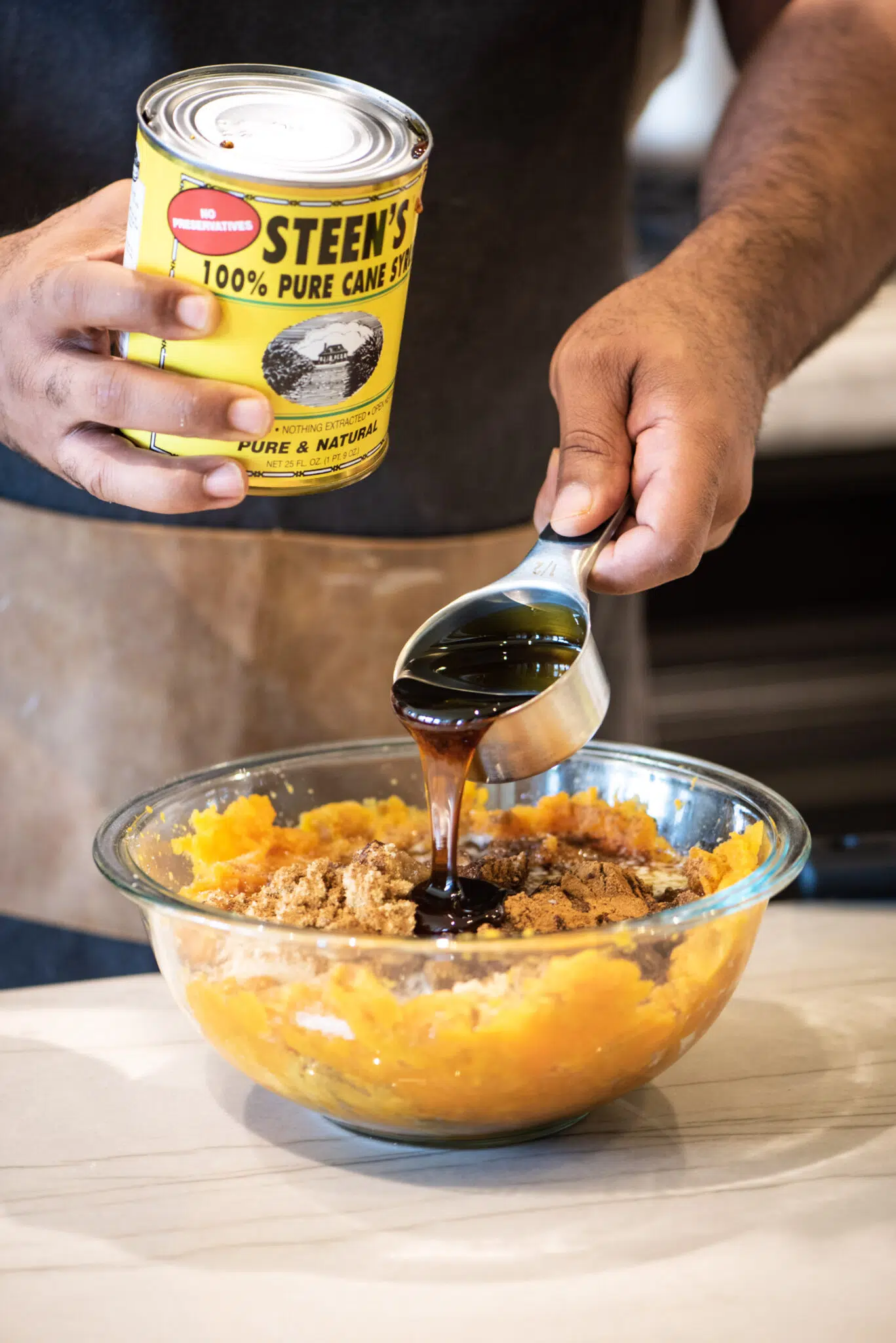
Add the dairy and eggs. Beat in the evaporated milk. Add the eggs one at a time, mixing on low speed just until each disappears, about 1 to 2 minutes total. Overbeating at this stage whips in air, which makes the custard puff and crack in the oven.
Fill the shells. Divide the filling evenly between the two frozen pie shells, leaving about 1/4 inch of headroom. Gently tap each pie on the counter to release air bubbles, then smooth the tops with a spatula (paid link).
Bake. Set the pies on the preheated baking sheet (paid link) and bake 50 to 55 minutes. The pie is done when the edges are set, and the center has a slight wobble when you gently shake it. If the crust edges brown too quickly, cover them with foil strips. Test for doneness by inserting a knife or toothpick near the center; it should come out clean, with only a few moist crumbs remaining.
Cool completely. Let the pies cool on a wire rack for at least 2 hours. The pie finishes setting as it cools, so cutting it warm gives you a loose slice. Serve at room temperature.
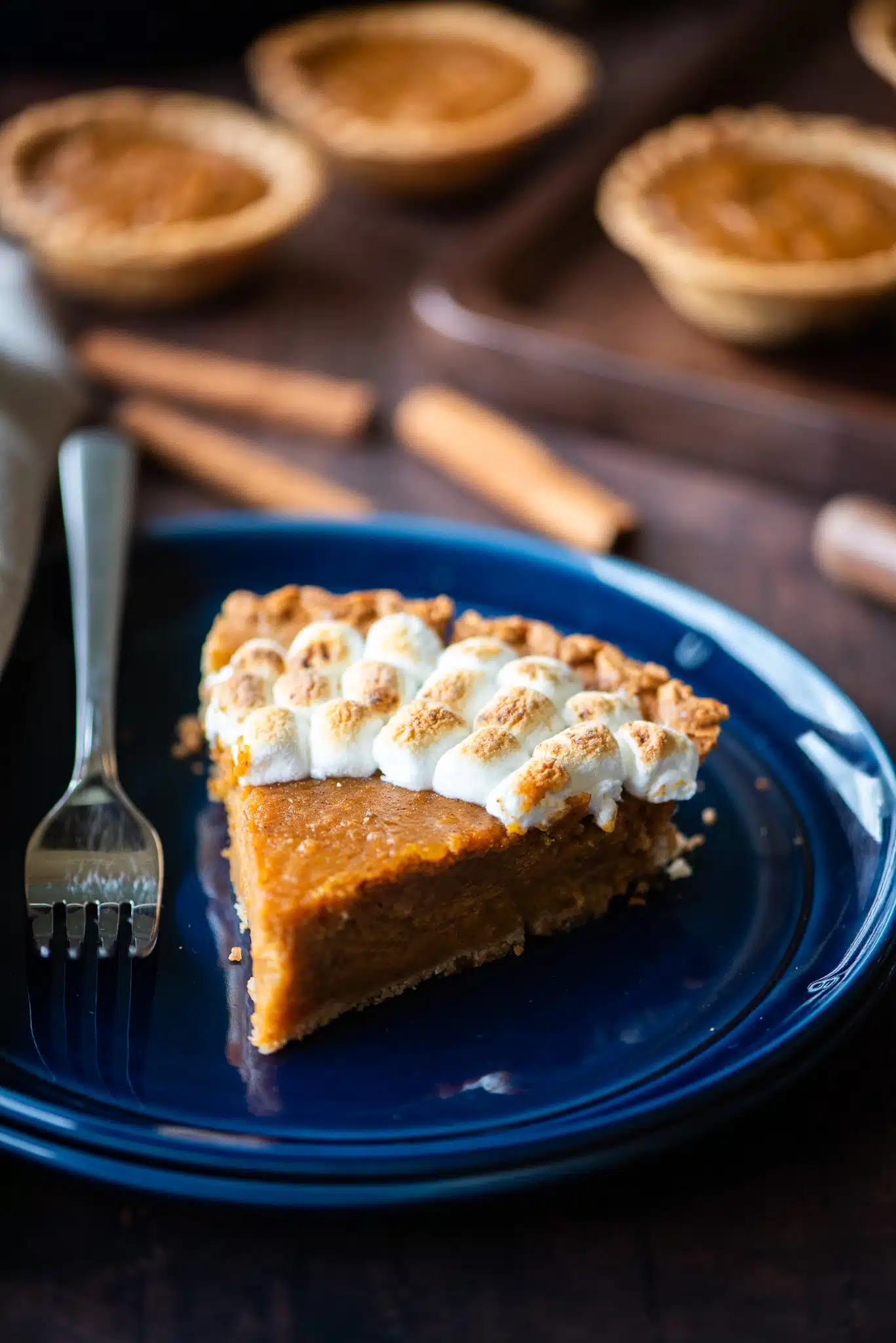
Decorate (optional). Sometimes, I take it a step further and toast marshmallows around the edge of my pie. I use a culinary torch to lightly toast them. You can also purchase marshmallow fluff and use the same torching technique.

Recipe Tips & Tricks
- Short on time? Boil instead. Peel and slice the potatoes into 1-inch cubes, cover with cold water, and simmer 15 to 20 minutes until fork-tender. You’ll trade some caramelized flavor for speed, and the pie will be a little lighter in flavor.
- For an ultra-creamy texture, push the finished filling through a fine-mesh strainer before pouring. It takes 3 minutes and catches every last fiber.
- Mind the jiggle. Pull the pie when the center wobbles, not liquid waves. Carryover heat finishes the job, and overbaking is what causes the crack down the middle.
- No cane syrup? Use an equal amount of dark corn syrup with 1 tablespoon of molasses, or straight maple syrup.
- Evaporated milk alternatives: Heavy cream makes it richer; half-and-half works too. For dairy-free, use full-fat canned coconut milk.
- A splash of bourbon: 1 to 2 tablespoons stirred in with the vanilla adds an oaky, caramel flavor that’s right at home in a Southern pie.
Make-Ahead, Storage, and Reheating Tips
- Make ahead: Bake the pies up to 2 days in advance. The spices bloom overnight, and the custard firms up, so day-two pie slices are cleaner and taste more rounded. You can also roast and mash the sweet potatoes up to 3 days ahead and refrigerate them in an airtight container.
- Room temperature: Because this is an egg-and-dairy custard, don’t leave the pie out more than 2 hours after it cools.
- Refrigerator: Cover loosely with plastic wrap or foil and refrigerate for up to 4 days.
- Freezer: Cool completely, then chill for 2 hours. Wrap tightly in plastic wrap and then foil, and freeze for up to 2 months. Thaw overnight in the refrigerator.
- Reheating: Sweet potato pie is excellent cold or at room temperature. For a warm slice, heat the whole pie at 325°F for 15 to 20 minutes, or warm a single slice in the microwave for 15 to 20 seconds. Re-crisp a thawed frozen pie in a 325°F oven for 10 minutes.
Frequently Asked Questions
What’s the difference between sweet potato pie and pumpkin pie?
They’re cousins, but sweet potato pie is naturally sweeter, denser, and creamier, with a caramel-like flavor. Pumpkin relies heavily on spice. That’s why Southern sweet potato pie typically uses less spice and leans on butter, vanilla, and syrup to let the potato shine.
Why did my sweet potato pie crack?
Cracks almost always come from overbaking or overbeating the eggs. Pull the pie while the center still has a gentle jiggle, mix the eggs on low just until combined, and let the pie cool gradually at room temperature rather than in the fridge.
Should I boil or bake sweet potatoes for pie?
Bake them whenever you can. Roasting drives off water and caramelizes the natural sugars, so the filling tastes richer and sets more reliably. Boiling takes about 30 minutes less and still works, as long as you drain and steam-dry the potatoes well, but the flavor is lighter, and you risk a wetter filling.
Which frozen pie crusts should I buy?
Nothing beats homemade pie crust, but making dough isn’t really my thing. When I’m making pies, I usually go with a refrigerated or frozen option. However, while I’m quick to buy a pre-made crust, not all pie crusts are created equal. I recommend Wholly Wholesome’s Organic Pie Shells. They also offer a gluten-free option. If you are comfortable buying your pie pans separately, you could use the fresh sheets of flat or rolled pastry dough. Trader Joe’s Pie Crust, Wholly Wholesome’s Organic Pie Dough, and Leadbetter’s French Picnic Pastry Sheets are great choices.
Print
Old-Fashioned Southern Sweet Potato Pie
Old-Fashioned Southern Sweet Potato Pie with cane syrup, warm spices, and a silky custard filling. A foolproof, make-ahead holiday classic.
- Total Time: 4 hours 10 minutes
- Yield: 2 (8-inch) pies, 16 slices 1x
Ingredients
- 3 medium sweet potatoes (8 to 12 oz. each, about 2 lbs. total), washed and left whole and unpeeled
- 1/2 cup (1 stick) unsalted butter, melted
- 1 cup granulated sugar
- 1 cup packed light brown sugar
- 1/2 cup pure cane syrup
- 1 tablespoon vanilla extract
- 1 tablespoon ground cinnamon
- 1 tablespoon ground nutmeg
- 1/2 teaspoon fine salt
- 1/2 cup evaporated milk
- 3 large eggs, room temperature
- 2 (8-inch) frozen pie shells
 Get Recipe Ingredients
Instructions
- Preheat the oven to 400°F. Wash the sweet potatoes, pat them dry, and prick each one 4 or 5 times with a fork to let steam escape. Set them on a foil-lined, rimmed baking sheet (paid link) and roast 45 to 60 minutes, until the skins are puffed and wrinkled, sticky syrup bubbles out, and they collapse when squeezed.
- Lower the oven to 350°F, move a rack to the lower third, and place a clean, rimmed baking sheet (paid link) on it to preheat. The hot sheet jump-starts the bottom crust and catches any drips.
- Let the potatoes rest for about 10 minutes, until they’re cool enough to handle. Halve them lengthwise and scoop the flesh into a large bowl. Discard the skins.
- While the flesh is still warm, beat it with a hand mixer (paid link) on medium speed for about 1 minute, until mostly smooth. Pull off any stringy fibers that wrap around the beaters, then continue. You should have about 3 1/2 cups of potato.
- Add the melted butter, granulated sugar, brown sugar, cane syrup, vanilla, cinnamon, nutmeg, and salt. Beat on medium speed for 2-3 minutes, until the sugars dissolve and the mixture turns glossy and smooth.
- Beat in the evaporated milk. Add the eggs one at a time, mixing on low speed just until each disappears, about 1-2 minutes total. Overbeating at this stage whips in air, which makes the custard puff and crack in the oven.
- Divide the filling evenly between the two frozen pie shells, leaving about 1/4 inch of headroom. Gently tap each pie on the counter to release air bubbles, then smooth the tops with a spatula (paid link).
- Set the pies on the preheated baking sheet (paid link) and bake for 50-55 minutes. The pie is done when the edges are set, and the center has a slight wobble when you gently shake it. If the crust edges brown too quickly, cover them with foil strips. Test for doneness by inserting a knife or toothpick near the center; it should come out clean, with only a few moist crumbs remaining.
- Let the pies cool on a wire rack for at least 2 hours. The pie finishes setting as it cools, so cutting it warm gives you a loose slice. Serve at room temperature.
- Decorate (optional): Sometimes, I toast marshmallows around the edge of my pie. I use a culinary torch to lightly toast them. You can also purchase marshmallow fluff and use the same torching technique.


Notes
Short on time? Boil instead. Peel and slice the potatoes into 1-inch cubes, cover with cold water, and simmer 15 to 20 minutes until fork-tender. You’ll trade some caramelized flavor for speed, and the pie will taste a little lighter.
For an ultra-creamy texture, push the finished filling through a fine-mesh strainer before pouring. It takes 3 minutes and catches every last fiber.
Mind the jiggle. Pull the pie when the center wobbles, not liquid waves. Carryover heat finishes the job, and overbaking is what causes the crack down the middle.
No cane syrup? Use an equal amount of dark corn syrup with 1 tablespoon of molasses, or straight maple syrup.
Evaporated milk alternatives: Heavy cream makes it richer; half-and-half works too. For a dairy-free version, use full-fat canned coconut milk.
A splash of bourbon: Stir in 1 to 2 tablespoons with the vanilla for an oaky, caramel flavor that feels right at home in a Southern pie.
- Prep Time: 20 minutes
- Cooling Time: 2 hours
- Cook Time: 1 hour 50 minutes
- Category: Dessert
- Method: Baked
- Cuisine: Southern
- Diet: Vegetarian
Nutrition
- Calories: 335
- Sugar: 36 g
- Sodium: 200 mg
- Fat: 12 g
- Saturated Fat: 6 g
- Carbohydrates: 54 g
- Fiber: 2 g
- Protein: 3 g
- Cholesterol: 52 mg
Is there any substitutes for the cane sugar syrup☹️
Hi Angelina. While we haven’t tested these substitutes, use an equal amount of dark corn syrup with 1 tablespoon of molasses or straight maple syrup. The taste will differ because of the ingredient change.
Great recipe! Some strings come off when peeling the potatoes. Also, when I mix my sweet potato pies, the strings stick to the mixer beaters, and I have to remove them throughout the mixing process.
This is definitely one to remember!
Love the video tutorials in this one.
Happy Cooking,
A Canuck Chef in the Netherlands,
Devan
Awesome, thanks Devan!
What about getting the strings out of the sweet potatoes my mother would use this gadget I call it because I don’t know the name of it but she would put the potatoes in it and squeeze it and all the strings would come out of the sides through the holes and I always saying that you got to get the strings out does anyone know the name of this gadget??
Most of the stringiness comes from the fibrous parts of the sweet potato right under the skin. When I use a hand mixer, I find the strings stick to the beaters. That’s how I do it, and I don’t have any issues with the strings.
The name of the gadget is a potato ricer. I still have my mother ricer and it must be at least 130 years old. (I am 70 years old).